
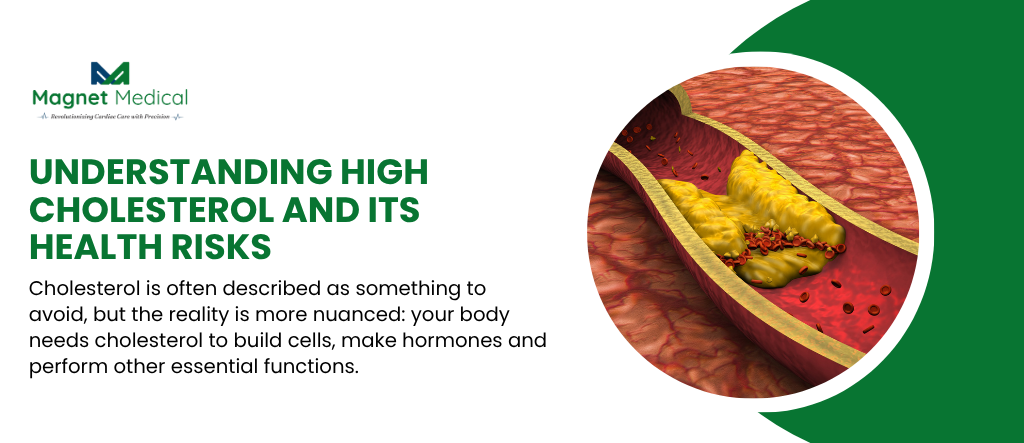
Cholesterol is often described as something to avoid, but the reality is more nuanced: your body needs cholesterol to build cells, make hormones and perform other essential functions. The concern arises when certain cholesterol-carrying particles particularly low-density lipoprotein cholesterol (LDL-C) remain elevated, increasing the likelihood of plaque buildup in arteries and cardiovascular disease.
Because high cholesterol often causes no noticeable symptoms, a person may have elevated levels without knowing it. Regular lipid testing and appropriate cardiovascular risk assessment are therefore important parts of preventive healthcare.
What Is Cholesterol?
Cholesterol is a waxy, fat-like substance produced naturally by the body. It is also obtained from food, particularly foods of animal origin. Because cholesterol does not dissolve freely in blood, it is transported through the bloodstream by particles called lipoproteins.
The most commonly discussed types are:
LDL Cholesterol
Low-density lipoprotein cholesterol (LDL-C) is often called “bad” cholesterol because elevated levels contribute to the development of atherosclerosis the buildup of fatty deposits in artery walls.
The 2026 ACC/AHA dyslipidemia guideline emphasizes that lower LDL-C, particularly in people at increased cardiovascular risk, is associated with greater protection against heart attack and stroke.
HDL Cholesterol
High-density lipoprotein cholesterol (HDL-C) is traditionally called “good” cholesterol. However, cardiovascular risk should not be assessed based on HDL-C alone. Other lipids, medical conditions and overall cardiovascular risk also matter.
Triglycerides
Triglycerides are another type of blood lipid. Persistently elevated triglycerides can contribute to cardiovascular risk and, at very high levels, can also increase the risk of pancreatitis.
Why Is High Cholesterol a Health Risk?
When atherogenic cholesterol particles remain elevated over time, they can contribute to plaque formation inside arteries.
This process, known as atherosclerosis, can narrow or stiffen blood vessels and restrict blood flow. If a plaque ruptures and a blood clot forms, it can potentially block blood flow and cause a cardiovascular event.
High LDL-C is therefore an important risk factor for:
- Coronary artery disease
- Heart attack
- Stroke
- Peripheral artery disease
- Other forms of atherosclerotic cardiovascular disease (ASCVD)
The 2026 ACC/AHA guideline specifically highlights prolonged exposure to elevated atherogenic lipids as an important contributor to lifetime cardiovascular risk.
High Cholesterol Usually Has No Symptoms
One of the biggest challenges with high cholesterol is that you may feel completely healthy while your cholesterol levels are elevated.
Unlike conditions that cause obvious symptoms, high cholesterol is generally detected through a blood test called a lipid profile or lipid panel.
This is why routine health assessments can be valuable, particularly for people with other cardiovascular risk factors.
What Causes High Cholesterol?
High cholesterol can result from a combination of genetics, lifestyle, medical conditions and age.
Common contributing factors include:
- Diet high in saturated fats
- Physical inactivity
- Excess body weight
- Smoking
- Diabetes
- Certain kidney or metabolic conditions
- Family history of high cholesterol or premature cardiovascular disease
- Inherited conditions such as familial hypercholesterolemia
Some people can have significantly elevated cholesterol because of genetics even when they follow a healthy lifestyle.
The 2026 guidelines emphasize that cardiovascular risk assessment should consider the broader picture rather than cholesterol numbers alone.
How Is High Cholesterol Diagnosed?
A lipid panel generally provides measurements of:
- Total cholesterol
- LDL-C
- HDL-C
- Triglycerides
Healthcare professionals may use these results together with factors such as age, blood pressure, diabetes, smoking status and family history to estimate cardiovascular risk.
The updated 2026 ACC/AHA guideline recommends the PREVENT-ASCVD equations for 10- and 30-year cardiovascular risk assessment in appropriate adults aged 30–79 without known ASCVD or subclinical atherosclerosis.
Importantly, there is no single cholesterol number that determines everyone’s treatment plan. Individual targets depend on overall cardiovascular risk.
What Are Healthy Cholesterol Levels?
Traditional reference ranges can be useful for understanding a lipid panel, but current treatment decisions increasingly focus on individual cardiovascular risk and LDL-C reduction goals.
For example, the 2026 ACC/AHA guideline identifies LDL-C goals based on risk. For primary prevention, an LDL-C goal below 100 mg/dL is recommended for people at borderline or intermediate risk, while a goal below 70 mg/dL is recommended for those at high risk. For people with ASCVD at very high risk, the recommended LDL-C goal is below 55 mg/dL.
These are clinical treatment goals, not universal targets for every person. A healthcare professional should interpret cholesterol results in the context of an individual’s complete health profile.
How Can You Lower Cholesterol Naturally?
Healthy lifestyle habits are an important foundation of cholesterol management.
1. Follow a Heart-Healthy Eating Pattern
Focus on an overall dietary pattern rich in:
- Vegetables and fruits
- Whole grains
- Nuts and seeds
- Lean or plant-based protein sources
- Healthy unsaturated fats
Replacing foods high in saturated fat with sources of unsaturated fat can help lower LDL-C.
2. Stay Physically Active
Regular physical activity supports cardiovascular health and can contribute to healthier cholesterol levels and overall risk reduction.
The American Heart Association recommends adults aim for at least 150 minutes of moderate-intensity physical activity per week, or 75 minutes of vigorous activity.
3. Maintain a Healthy Weight
If you have overweight or obesity, achieving a healthier weight can improve several cardiovascular risk factors, including lipid levels.
4. Avoid Tobacco
Avoiding tobacco products is an important part of cardiovascular risk reduction and overall heart health.
5. Prioritize Healthy Sleep
Adequate, consistent sleep is also included among the American Heart Association’s key measures for cardiovascular health.
When Are Cholesterol-Lowering Medicines Needed?
Lifestyle changes are important, but they may not always be enough.
Some people particularly those with established cardiovascular disease, very high LDL-C, diabetes, chronic kidney disease or inherited cholesterol disorders may benefit from cholesterol-lowering medication.
Statins remain the foundation of LDL-lowering therapy, while other medications such as ezetimibe, bempedoic acid and PCSK9-targeting therapies may be considered for certain patients when additional LDL-C reduction is needed.
Medication decisions should be made with a healthcare professional based on individual cardiovascular risk, cholesterol levels, medical history and treatment response.
Newer Tests That Can Help Assess Risk
The 2026 ACC/AHA guideline highlights several additional markers that can provide a more complete picture of cardiovascular risk in selected patients.
Lipoprotein(a) — Lp(a)
Lp(a) is largely genetically determined. The guideline recommends measuring it at least once during adulthood because elevated levels can increase cardiovascular risk.
Apolipoprotein B — ApoB
ApoB testing can provide additional information about the number of atherogenic particles and may be particularly useful in certain people with diabetes, elevated triglycerides or other cardiovascular risk factors.
Coronary Artery Calcium — CAC
For selected people where cardiovascular risk remains uncertain, a coronary artery calcium scan may help refine risk assessment and guide treatment discussions.
Why Early Cholesterol Management Matters
Cholesterol-related cardiovascular risk is not simply about what your numbers look like today. Long-term exposure to elevated LDL-C matters.
The 2026 ACC/AHA guideline therefore emphasizes earlier attention to unhealthy lipid levels and healthy lifestyle habits throughout life. It also recognizes that elevated cholesterol can begin affecting cardiovascular risk during childhood and adolescence.
Early identification gives individuals and healthcare professionals an opportunity to address modifiable risk factors before cardiovascular disease develops.
Key Takeaways
High cholesterol can be easy to overlook because it usually doesn’t cause symptoms.
Remember:
LDL-C is an important contributor to atherosclerotic cardiovascular risk.
High cholesterol can contribute to plaque buildup in arteries.
A lipid panel can identify abnormal cholesterol levels.
Lifestyle changes are an important foundation of treatment.
Some people need cholesterol-lowering medication.
Cardiovascular risk not cholesterol alone helps guide treatment decisions.
Early and sustained management can help reduce long-term cardiovascular risk.
Conclusion
High cholesterol is a manageable cardiovascular risk factor, but knowing your numbers is the first step.
A heart-healthy lifestyle, regular health assessments and appropriate medical treatment can help reduce the long-term impact of unhealthy cholesterol levels. If you have high cholesterol or other cardiovascular risk factors, discuss your results with a qualified healthcare professional to determine the right approach for you.
About Magnet Medical
At Magnet Medical, we are committed to supporting better cardiac care through medical-device innovation, quality and healthcare awareness.
Precision in every component. Protection in every beat.