
Introduction
Modern surgery has evolved dramatically over the last few decades, driven by continuous advancements in medical technology. Among the most transformative innovations is robotic-assisted surgery, which is redefining how surgeons perform complex procedures with greater precision, control, and efficiency.
Rather than replacing surgeons, robotic systems enhance their capabilities by providing high-definition visualization, improved dexterity, and superior precision. Today, robotic-assisted surgery is being adopted across specialties including cardiology, urology, gynecology, orthopedics, oncology, and general surgery, helping improve patient outcomes while advancing the future of healthcare.
What Is Robotic-Assisted Surgery?
Robotic-assisted surgery is a minimally invasive surgical technique where a surgeon controls robotic instruments through a sophisticated computer-guided system.
The robotic platform typically includes:
- A surgeon’s console
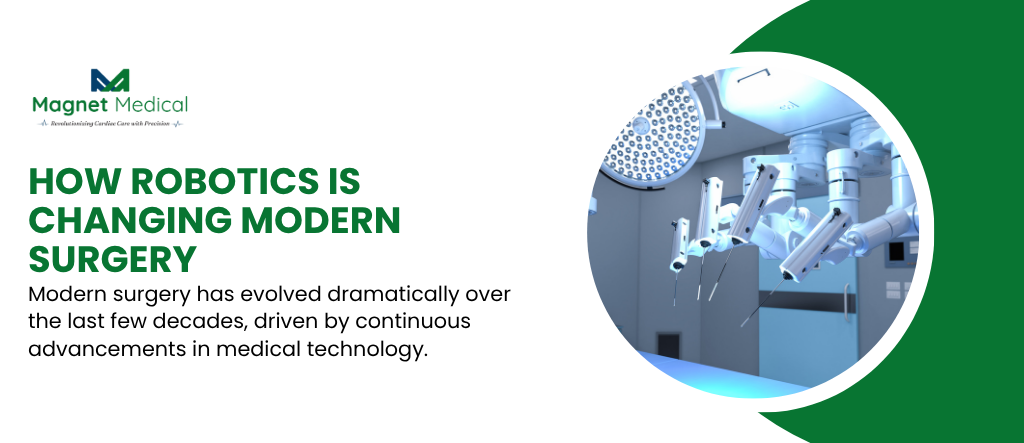
- Robotic arms equipped with specialized surgical instruments
- A high-definition 3D visualization system
- Advanced software for precise instrument movement
Every movement made by the surgeon is translated into highly controlled, precise actions by the robotic instruments.
Importantly, the robot does not operate independently it remains fully controlled by the surgeon throughout the procedure.
Improved Precision During Complex Procedures
One of the greatest advantages of robotic surgery is its exceptional level of precision.
Robotic instruments can perform delicate movements that may be difficult to achieve with traditional surgical tools. The system filters natural hand tremors and allows surgeons to work with enhanced stability and accuracy, especially in confined anatomical spaces.
This precision is particularly valuable during complex procedures involving the heart, brain, prostate, spine, and other sensitive organs.
Better Visualization for Surgeons
Robotic surgical platforms provide surgeons with magnified, high-definition, three-dimensional views of the surgical site.
Enhanced visualization allows surgeons to:
- Better identify anatomical structures
- Distinguish blood vessels and nerves more clearly
- Improve surgical planning during procedures
- Perform delicate dissections with greater confidence
Improved visibility contributes to safer and more controlled surgeries.
Benefits for Patients
Robotic-assisted surgery offers several potential benefits for patients, depending on the procedure and individual circumstances.
These may include:
- Smaller surgical incisions
- Reduced blood loss
- Lower risk of infection
- Less post-operative pain
- Reduced tissue trauma
- Shorter hospital stays
- Faster recovery
- Earlier return to daily activities
Not every patient or procedure is suitable for robotic surgery, and outcomes depend on multiple factors, including the patient’s condition and the surgeon’s expertise.
Applications Across Medical Specialties
Robotic surgery is expanding rapidly across multiple medical disciplines.
Cardiac Surgery
In cardiac procedures, robotic systems help surgeons perform selected minimally invasive operations through smaller incisions, potentially reducing recovery time while maintaining surgical precision.
Urology
Robotic-assisted surgery is widely used for procedures such as prostate surgery and kidney operations, where precision is especially important.
Gynecology
Many minimally invasive gynecological procedures now utilize robotic technology for improved visualization and instrument control.
Orthopedics
Robotic systems assist with joint replacement procedures by supporting precise implant positioning and surgical planning.
Oncology
Cancer surgeons increasingly use robotic platforms for selected procedures requiring meticulous tissue removal while aiming to preserve surrounding healthy structures.
Artificial Intelligence and Robotics
Artificial Intelligence (AI) is beginning to complement robotic surgery by providing advanced imaging analysis, workflow optimization, and decision-support tools.
Current and emerging applications include:
- Surgical planning assistance
- Image-guided navigation
- Anatomical mapping
- Workflow optimization
- Performance analysis for surgical training
While AI can support clinical decision-making, the surgeon remains responsible for all operative decisions.
The Role of Medical Devices
Robotic surgery relies on a wide range of high-quality medical devices, including:
- Surgical instruments
- Cannulas
- Perfusion equipment
- Cardiac accessories
- Monitoring systems
- Imaging technologies
The reliability, precision, and quality of these devices play an essential role in supporting safe and effective surgical procedures.
Companies such as Magnet Medical contribute to advancing cardiac care by developing precision-engineered medical devices that support healthcare professionals in delivering high standards of patient care.
Challenges and Considerations
Despite its many advantages, robotic surgery also presents challenges.
These include:
- High initial investment costs
- Specialized surgeon training requirements
- Equipment maintenance
- Availability primarily in larger healthcare centers
- Procedure-specific suitability
As technology advances and adoption increases, these barriers are expected to gradually decrease.
The Future of Robotic Surgery
The next generation of robotic surgery is expected to become even more sophisticated through innovations such as:
- AI-assisted surgical guidance
- Enhanced imaging technologies
- Improved robotic dexterity
- Smaller and more versatile robotic platforms
- Greater integration with digital health systems
- Remote collaboration and surgical education tools
Future developments will continue to focus on improving surgical precision, patient safety, and clinical efficiency.
Conclusion
Robotic-assisted surgery is transforming modern healthcare by empowering surgeons with greater precision, visualization, and control. As technology continues to evolve, robotic systems are helping make complex procedures safer, more efficient, and less invasive for many patients.
Combined with ongoing advances in medical devices, digital health, and surgical innovation, robotics represents a significant step toward the future of patient-centered care.
While robotics enhances surgical capabilities, successful outcomes continue to depend on skilled healthcare professionals, evidence-based practices, and high-quality medical technologies working together to deliver the best possible care.