
Introduction
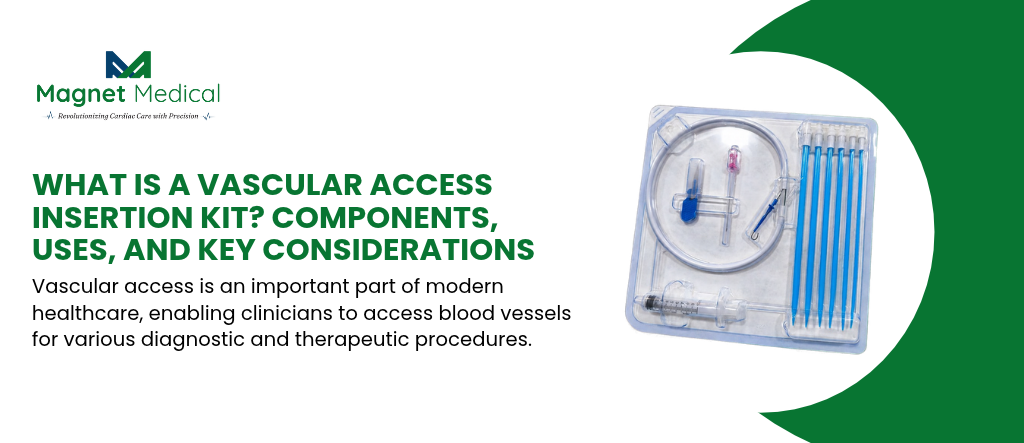
Vascular access is an important part of modern healthcare, enabling clinicians to access blood vessels for various diagnostic and therapeutic procedures. Having the appropriate equipment available can help healthcare professionals prepare for these procedures in an organized and efficient manner.
A vascular access insertion kit is a collection of medical components assembled to support vascular access procedures. Depending on its intended application and configuration, a kit may include items used during preparation, vessel access, catheter insertion, and related procedural steps.
Understanding the purpose, components, and selection considerations of an insertion kit can help healthcare professionals and medical procurement teams make informed decisions based on clinical requirements.
What Is a Vascular Access Insertion Kit?
A vascular access insertion kit is a packaged set of medical supplies intended to support a specific vascular access procedure. The exact contents vary according to the manufacturer’s design, the type of access being established, and the intended clinical application.
These kits are designed to bring relevant components together in one package, helping clinical teams organize the supplies needed for the intended procedure.
Some kits are designed for particular access techniques or devices, so healthcare professionals should always check the product specifications and instructions for use before selecting or using a kit.
What Are the Common Components of a Vascular Access Insertion Kit?
The components of a vascular access insertion kit depend on its configuration. Depending on the intended procedure, a kit may include some of the following:
1. Introducer Components
Introducer components may help facilitate the placement of a compatible catheter or cannula during an intended vascular access procedure. Their design and use depend on the specific device and insertion technique.
2. Dilator
A dilator may be used in certain access techniques to facilitate passage of a compatible device. The type, dimensions, and compatibility of the dilator must match the intended application.
3. Guidewire
Some insertion kits include a guidewire to help guide compatible devices during particular vascular access techniques. The appropriate guidewire and technique depend on the procedure and the manufacturer’s instructions.
4. Needle or Access Component
Depending on the kit, an access needle or another component may be included to support the initial step of a specified access technique.
5. Additional Procedural Supplies
Some kits may include other accessories required for the intended procedure. Not every kit contains the same components, and users should refer to the product label and supplied documentation for the exact contents.
Important: The components listed above are examples of items that may be found in some vascular access kits. They should not be interpreted as a confirmed component list for every kit or for Magnet Medical’s specific Insertion Kit.
Why Are Vascular Access Insertion Kits Used?
1. Convenient Organization of Supplies
A kit brings specified components together in a package, helping healthcare professionals identify and prepare the supplies required for the intended procedure.
2. Support for Clinical Workflow
Having relevant supplies grouped together can support procedural preparation and help teams organize their workflow. Actual workflow benefits depend on the kit configuration, clinical environment, and established protocols.
3. Sterile Packaging, Where Specified
Insertion kits supplied as sterile products can help maintain the intended sterility of their contents when the packaging remains intact and storage requirements are followed. Healthcare professionals should check the label, expiry date, and package integrity before use.
4. Application-Specific Equipment
A kit designed for a particular procedure can provide components selected for that application. Confirming device compatibility and intended use is essential before a kit is selected.
5. Easier Procurement and Inventory Planning
For hospitals and healthcare facilities, packaged kits may simplify inventory planning by grouping designated supplies under a single product specification. Procurement teams should assess the kit’s contents, usage requirements, and suitability for their clinical setting.
How to Choose the Right Vascular Access Insertion Kit
Selecting an appropriate insertion kit requires consideration of the intended procedure and the device’s documented specifications.
Intended Clinical Application
Confirm whether the kit is suitable for the type of vascular access procedure for which it will be used.
Component Configuration
Review the included components, their dimensions, and their compatibility with the intended catheter or cannula.
Sterility and Packaging
Check whether the product is supplied sterile, how it must be stored, and whether the packaging is intact before use.
Product Quality and Documentation
Review the manufacturer’s technical specifications, instructions for use, applicable conformity documentation, and relevant quality requirements.
Ease of Preparation and Handling
Consider how the kit’s layout and component arrangement fit the clinical team’s established workflow.
Reliable Supply and Manufacturer Support
Hospitals and procurement teams may also evaluate product availability, documentation, delivery arrangements, and the manufacturer’s responsiveness to product-related enquiries.
Vascular Access Insertion Kits and Patient Care
Vascular access procedures require appropriate clinical assessment, trained personnel, suitable equipment, and adherence to established infection prevention and procedural protocols.
An insertion kit is one part of this process. Its presence does not replace clinical judgment, correct device selection, aseptic technique, or compliance with the manufacturer’s instructions.
Healthcare professionals should use only kits appropriate for the intended application and follow their institution’s approved procedures.
Magnet Medical Insertion Kit
Magnet Medical provides an Insertion Kit designed to bring essential components for vascular access procedures together in a convenient, sterile package, according to its product information.
The product is intended to support clinical workflow and procedural preparation. Healthcare professionals and procurement teams should consult Magnet Medical for the exact component list, intended applications, specifications, and applicable product documentation before making a selection.
At Magnet Medical, we recognize the importance of product design, quality, and dependable support for healthcare professionals.
Frequently Asked Questions
What is a vascular access insertion kit used for?
It is a collection of medical components intended to support a specified vascular access procedure. Its exact purpose depends on the kit’s configuration and intended use.
Does every vascular access insertion kit contain the same components?
No. Components vary by manufacturer, product model, access technique, and intended application. Always check the product documentation.
Are vascular access insertion kits sterile?
Some kits are supplied sterile, while product configurations may differ. Verify the sterile status, packaging, expiry date, and storage instructions on the specific product label.
What should hospitals consider when purchasing an insertion kit?
Hospitals should assess intended use, component compatibility, packaging and sterility requirements, technical documentation, product quality, availability, and manufacturer support.
How can I obtain specifications for Magnet Medical’s Insertion Kit?
Contact Magnet Medical directly to request the current product specifications, confirmed component list, intended use, and relevant documentation.
Conclusion
A vascular access insertion kit brings together components intended to support a specified vascular access procedure. Understanding its configuration, intended application, sterility status, and compatibility helps healthcare professionals and procurement teams evaluate whether a particular kit meets their requirements.