
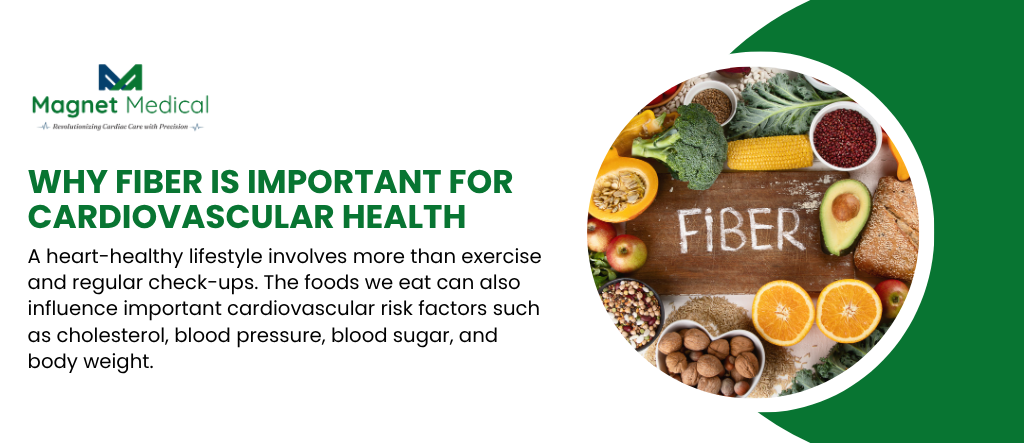
A heart-healthy lifestyle involves more than exercise and regular check-ups. The foods we eat can also influence important cardiovascular risk factors such as cholesterol, blood pressure, blood sugar, and body weight. Among the nutrients that deserve attention, dietary fiber plays an important role.
Fiber is a type of carbohydrate found naturally in plant-based foods. Because much of it is not fully digested by the body, it moves through the digestive system and can support several processes that are relevant to cardiovascular health.
What Is Dietary Fiber?
Dietary fiber is mainly found in fruits, vegetables, whole grains, legumes, nuts, and seeds. It can generally be divided into two types:
Soluble Fiber
Soluble fiber dissolves in water and forms a gel-like substance in the digestive tract. It is found in foods such as:
- Oats
- Barley
- Beans and lentils
- Apples
- Citrus fruits
- Some vegetables
Soluble fiber can help reduce the absorption of dietary cholesterol and has been associated with healthier blood cholesterol levels.
Insoluble Fiber
Insoluble fiber does not dissolve in water. It adds bulk to stool and supports regular bowel movements.
Good sources include:
- Whole grains
- Wheat bran
- Vegetables
- Nuts
- Seeds
- Potato and vegetable skins
Both types contribute to a balanced, fiber-rich diet.
How Does Fiber Support Heart Health?
1. Helps Support Healthy Cholesterol Levels
Certain types of soluble fiber can help reduce LDL cholesterol, often referred to as “bad” cholesterol. It does this partly by interfering with the absorption and recycling of cholesterol and bile acids in the digestive system.
Maintaining healthy cholesterol levels is important because elevated LDL cholesterol can contribute to plaque buildup in arteries.
2. Supports Healthy Blood Pressure
Diets rich in fruits, vegetables, whole grains, legumes, nuts, and seeds provide fiber along with other nutrients associated with cardiovascular health.
A balanced, fiber-rich eating pattern may therefore form part of an overall lifestyle that supports healthy blood pressure.
3. Helps Manage Blood Sugar
Some high-fiber foods are digested more slowly than refined carbohydrate foods. This can help slow the rise in blood glucose after meals.
Better blood sugar management is particularly relevant because persistently elevated blood glucose can increase cardiovascular risk over time.
4. Supports Healthy Weight Management
High-fiber foods can help you feel fuller for longer. Including them in meals may make it easier to maintain appropriate portion sizes and support healthy body weight.
Maintaining a healthy weight is one component of reducing cardiovascular risk.
5. Supports Gut Health
Certain fibers are fermented by beneficial bacteria in the large intestine. This process produces short-chain fatty acids and supports a healthy gut environment.
Research continues to explore the relationship between the gut microbiome, metabolism, inflammation, and cardiovascular health.
Best High-Fiber Foods for a Heart-Friendly Diet
Adding a variety of plant-based foods is a practical way to increase fiber intake.
Fruits
- Apples
- Pears
- Oranges
- Guava
- Berries
- Bananas
Vegetables
- Carrots
- Broccoli
- Green peas
- Spinach
- Sweet potatoes
- Other leafy greens
Whole Grains
- Oats
- Barley
- Brown rice
- Whole-wheat products
- Millets
Legumes
- Lentils
- Chickpeas
- Kidney beans
- Black beans
- Green peas
Nuts and Seeds
- Almonds
- Walnuts
- Chia seeds
- Flaxseeds
- Sunflower seeds
How Much Fiber Do You Need?
Fiber requirements vary depending on factors such as age and sex. For many adults, a daily intake of roughly 25–30 grams or more can be a useful general target, depending on individual needs.
However, many people do not consume enough fiber.
Instead of focusing only on a number, a practical approach is to include a fiber-rich food at most meals.
For example:
Breakfast: Oats with fruit and seeds
Lunch: Whole-grain roti with dal and vegetables
Snack: Fruit or a small portion of nuts
Dinner: Brown rice or millet with beans and vegetables
Tips for Increasing Fiber Intake
If your current diet is low in fiber, increase your intake gradually.
Choose whole grains: Replace some refined grains with oats, whole wheat, brown rice, or millets.
Eat more vegetables: Add vegetables to lunch and dinner rather than treating them as an occasional side dish.
Include legumes regularly: Dal, chickpeas, beans, and lentils are excellent sources of fiber.
Choose whole fruits: Whole fruits generally provide more fiber than fruit juices.
Add nuts and seeds: Sprinkle flaxseeds or chia seeds over suitable meals, or include a small serving of nuts.
Drink enough fluids: Adequate hydration can be particularly helpful when increasing fiber intake.
Fiber Alone Isn’t the Whole Story
While fiber can be an important part of a heart-conscious diet, cardiovascular health depends on many factors.
A balanced diet should also emphasize a variety of vegetables and fruits, whole grains, legumes, nuts and seeds, and appropriate sources of protein and healthy fats while limiting excessive amounts of added sugars, sodium, and highly processed foods.
Regular physical activity, healthy sleep, avoiding tobacco, maintaining a healthy weight, and managing conditions such as high blood pressure, diabetes, and high cholesterol are also important.
Conclusion
Dietary fiber is an important component of a cardiovascular-friendly eating pattern. By supporting healthy cholesterol levels, blood sugar management, digestive health, and healthy weight management, fiber can contribute to overall heart health.
Small dietary changes—such as choosing whole grains, eating more vegetables and fruits, adding legumes, and including nuts and seeds—can make it easier to increase daily fiber intake.
A heart-healthy diet isn’t about one “superfood.” It’s about building consistent, balanced eating habits over time.
Magnet Medical — Revolutionizing Cardiac Care with Precision.